October marked, The National Disability Employment Awareness Month (NDEAM), and across corporate offices and HR departments, it has been a season of webinars, discussions, and renewed commitments to inclusion.
But now that the month is wraped up, it’s worth pausing to ask a deeper question: What happens after October?
Too often, organizations treat work accommodations like a high-stakes legal hurdle. Once the initial paperwork is signed and basic equipment or physical setup is complete, management breathes a sigh of relief, checks the box, and assumes the job is done.
The reality? Accommodations don’t automatically solve a workflow on Day 1. For forward-thinking HR leaders, department heads, and supervisors, moving past basic compliance requires looking at how offices are actually run. Here is what we need to rethink as we move forward.
Moving Past the "Day 1 Compliance Trap"
When leadership focuses solely on the legal and administrative side of accommodations, they miss the bigger picture. Compliance keeps an organization out of legal trouble, but community keeps your best talent engaged.
When accessibility is treated as a whispered secret or a red-tape burden, employees feel like isolated outliers. True workplace inclusivity means organizations benefit not just by managing legal minimums, but by actively focusing on accessibility and building a supportive environment for the people seeking support.
The Visibility Paradox: Permanent Disabilities & Ongoing Support
For employees managing permanent disabilities—such as hearing loss or using a mobility aid—the physical reality and baseline expectations are often obvious to everyone in the room.
Because the accommodation is visible or well-established, leadership frequently falls into a dangerous blind spot: Visibility does not equal ongoing support.

Just because an office has a ramp or an employee uses a specific communication tool doesn't mean their daily work environment is frictionless. When hybrid tools glitch, rapid-fire cross-talk increases, or new projects pile up, professionals managing permanent access needs can quietly end up isolated. Expecting a one-time setup to carry someone through an entire career is like installing software once and never updating it. Permanent needs require living, breathing operational support.
Upfront Onboarding & Proactive Check-In Rhythms
If we want employees to feel secure and open about their needs, HR, managers, and supervisors cannot wait for a crisis or an annual performance review to check in:
-Progressive workplaces are shifting their approach through two simple operational shifts:
-Baking inclusion into onboarding: Introducing communication tools and accessibility standards right from Day 1 so support is standard, not a secret.
-Establishing a rhythm of care: Creating low-pressure check-ins (at 30 and 60 days post-implementation) where leadership simply asks: “How is this setup actually supporting your daily workflow right now, and what needs to shift?”
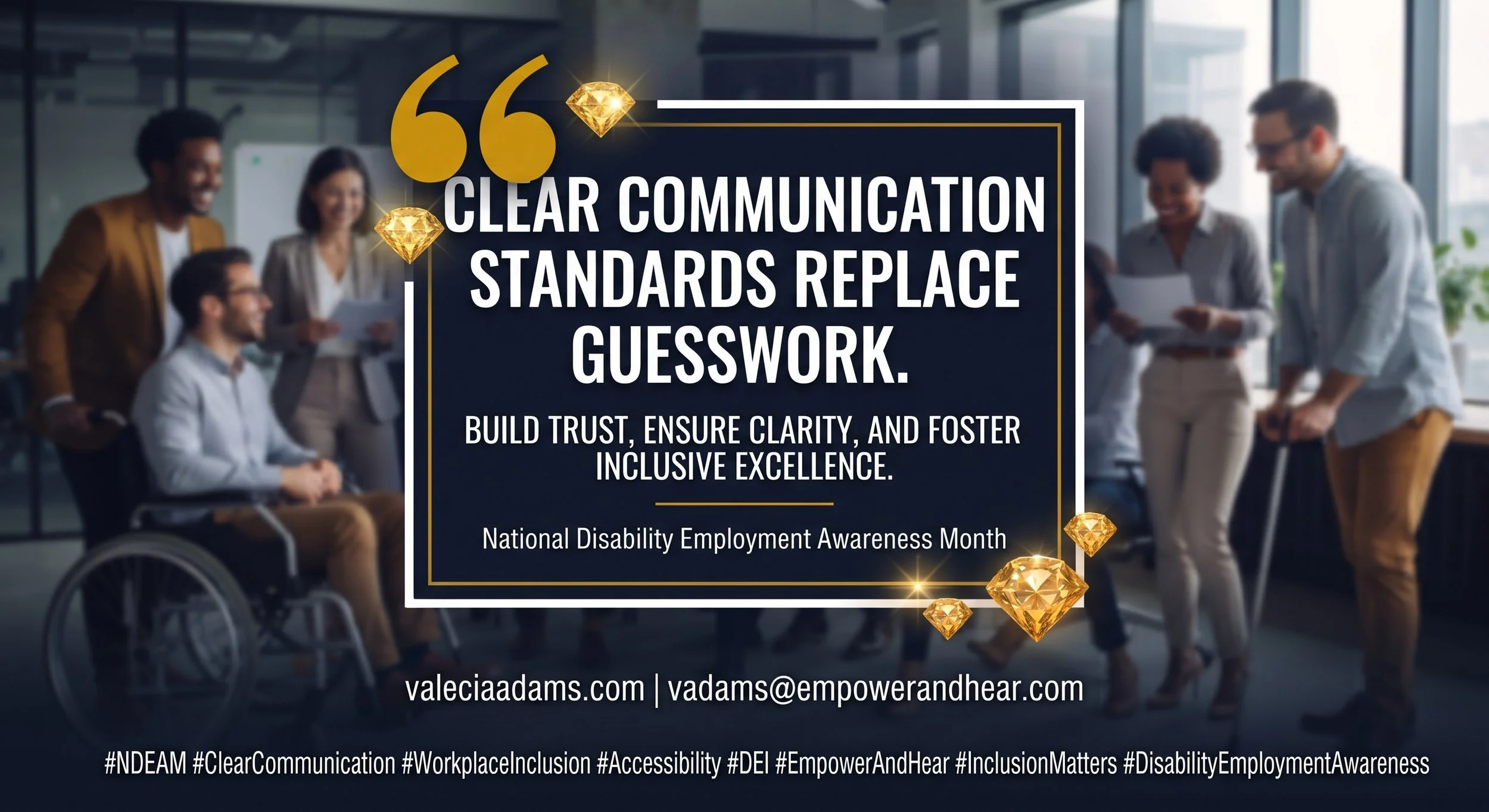
When leadership takes the initiative to follow up proactively, it removes the fear of speaking up. Employees stop worrying about being viewed as a "burden" and start trusting that their success matters.
As NDEAM has comes to a close, let's remember that celebrating value and talent isn't just about a 31-day campaign. It’s about building an operational culture where differences don't make a difference—all year round.
🌐 Website: www.valeciaadams.com
📧 Email: vadams@empowerandhear.com
Blessings,
Coach Vee