From Hiding in the Quiet to Living Out Loud
For many of us navigating the world with hearing loss, the initial response isn't advocacy—it is camouflage. I spent years perfecting the art of "bluffing," a survival mechanism where I would nod and smile in conversations I could only half-hear. But as a Gallaudet-trained mentor and HLAA leader, I’ve learned that the transition from passive observer to active leader begins with a difficult truth: pretending is a high-cost strategy. The "exhaustion gap" is a physical and mental reality; it is the total drain that occurs when your brain overexerts itself to fill in the blanks of muffled speech. Acknowledging this fatigue is the first step toward reclaiming your social energy and mental health.
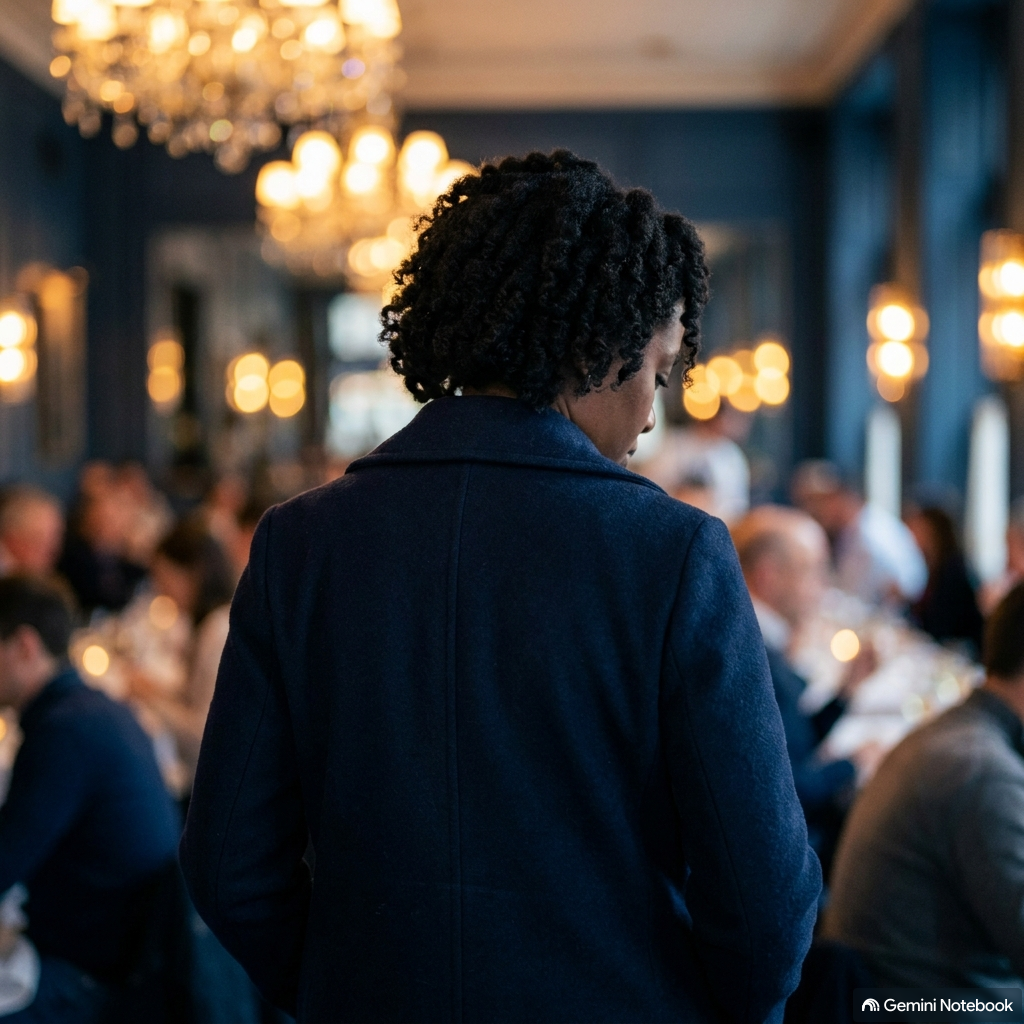
A stylish Black woman from a three-quarter back angle, standing in a bustling, upscale restaurant, alone.
The Anatomy of Hiding After spending years of nodding and smiling, pretending was absolutely exhausting and it left me feeling isolated. Bluffing is not a harmless shortcut; it leads directly to listening and concentration fatigue. Because hearing loss often reduces clarity—making voices sound "loud but not clear"—the brain must work overtime to re-learn sounds and decode fragmented information. This constant cognitive load creates a barrier to genuine connection, eventually leading to social withdrawal because the energy required to simply "exist" in a conversation becomes too great to sustain.
The Self-Stigma Barrier The primary driver of this exhaustion is often an "internalized critic" that whispers that hearing aids are for the "old" or "incapable." This stigma is the primary engine of denial. We refuse treatment to avoid the label of "disability," yet in doing so, we walk straight into the very isolation we were trying to escape. When we hide our needs, we lose our connection to the world, making it impossible to lead or participate. The solution isn't becoming a better actor; it’s a fundamental shift in how you see yourself.
Radical Acceptance and the Changed Mindset
Acceptance is not a surrender; it is a strategic launchpad for a vibrant, uninhibited life. I’ve learned that the first step is choosing not to feel threatened by your own body. We must transform "disability" from a negative label into a neutral reality. Hearing loss is a health condition, not a personal failure. Much like wearing glasses for vision, needing hearing support is simply a tool for functional success.
The "Best Friends" Metaphor I view my hearing aids not as devices, but as my "best friends." I’ve made them part of my daily self-care routine: I put them in immediately after getting dressed, keep them clean, and charge them every night. This isn’t just maintenance—it’s an act of preparation for leadership. It is important to be clinically honest, however: these "best friends" help immensely by increasing volume and access to speech, but they do not restore "normal" or perfect hearing. They are tools for mastery, not a cure.
The Power of Mirror Practice Authentic social interaction requires "muscle memory," and I teach this through Mirror Practice.
1. Stand eye-to-eye with yourself in the mirror.
2. Speak your truth clearly: "Hi, I'm Valecia. I’m hard of hearing, so I’ll need you to face me when we talk."
3. Watch your mouth and your posture. See the confidence in your own eyes.
4. Repeat until the tremor leaves your voice. Doing this removes the "sting" of the revelation. You aren't asking for a favor; you are providing others with the map they need to reach you.
Practical Engineering for Dining and Events
Thriving in public spaces requires "Environmental Engineering"—the proactive manipulation of your surroundings to ensure communication success. You are the architect of your social experience.
Pre-Arrival Preparation Hacks:
The Online Reservation Hack: When booking a table, I always use the "special requests" box. I specifically ask for a quiet booth, a table far from the kitchen or loud speakers, and an area with optimal lighting for lip-reading.
The Menu Scope: I look up menus online in advance. Reducing the cognitive load of making choices in a dim, noisy environment leaves me with more energy for the actual conversation.
Real-Time Social Tactics
The Hearing Buddy: In complex group settings, enlist a trusted "confidence buddy" to help bridge conversation gaps. Remember that this is a reciprocal relationship; offer them support in other areas to show your appreciation.
The Direct Script: Use assertive language to set the stage.
* "Hi, let me share that I am hard of hearing and I wear hearing aids, please face me while talking."
* "I hear much better when we are face-to-face than from another room."
Mastery through Humor: Even with the best engineering, people will slip into old habits. When they do, I use the "Laugh it Off" strategy. If a friend turns away, I’ll say with a smile: "Oops, you're doing that 'talking to my shoulder' thing again—I’m over here!" This keeps the focus on connection rather than frustration.
The Power of Connection: Representation and Intersectionality
Personal advocacy is the fuel for collective strength. When we speak up, we contribute to a broader movement of visibility, specifically within the Black community.
Breaking Isolation through Tribe Finding Your "tribe" can come through organizations like HLAA and can be life-changing. There are approximately 2 million Black Americans living with hearing loss. Interestingly, research shows that the odds of hearing loss are 40–60% lower for Black adults than white adults. While this is a positive stat, it creates a "double invisibility"—we are a smaller group within our own community, making it even harder to find role models who look like us.
Addressing Cultural Considerations For Black women: This journey is intersectional. We navigate both systemic audism—the belief that being able to hear is superior—and a history of healthcare mistrust rooted in events like the Tuskegee syphilis experiment. This legacy of medical maltreatment can make seeking hearing care feel like a risk. By showing up as visible leaders, we normalize hearing care as a standard health support. We break the silence and ensure that the next generation doesn't have to hide in the quiet.
Owning the Reality
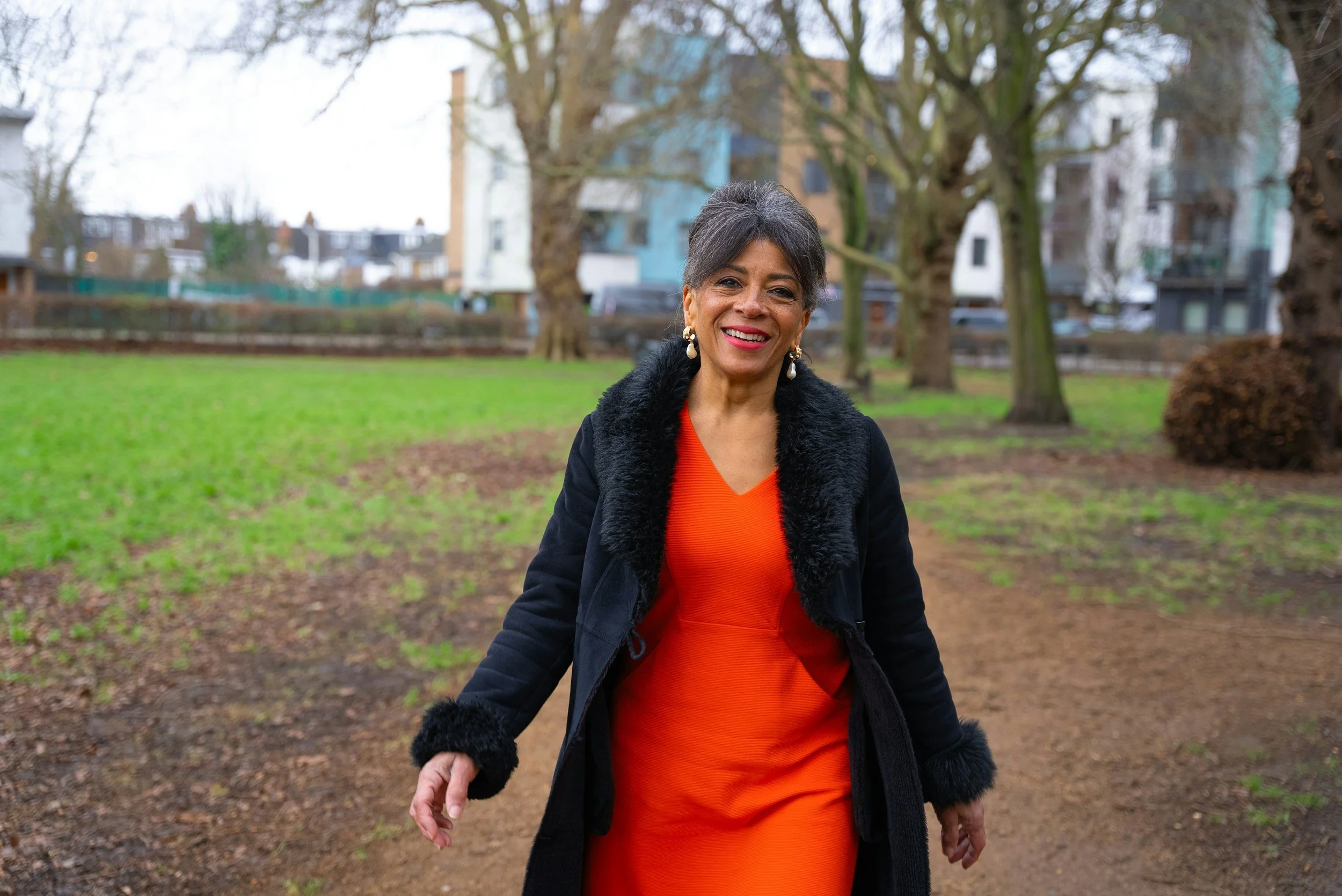
A smiling woman radiating a sense of confidence.
Empowerment is a choice I make every morning. It is the decision to move from the quiet corners of "bluffing" into the vibrant light of active participation. Do not wait for the world to become quieter; engineer your world to be clearer. My final charge to you is simple:
Choose to lead. Put your devices in. Use your voice. Use strategies, tips, and invest in devices and programs to help with hearing loss and to embrace your reality. Choose to lead. Your perspective is not a limitation; it is a unique strength the world needs to hear.
Blessings,
Valecia Adams
Peer Mentor-Gallaudet University Trained
Hearing Health Advocate